
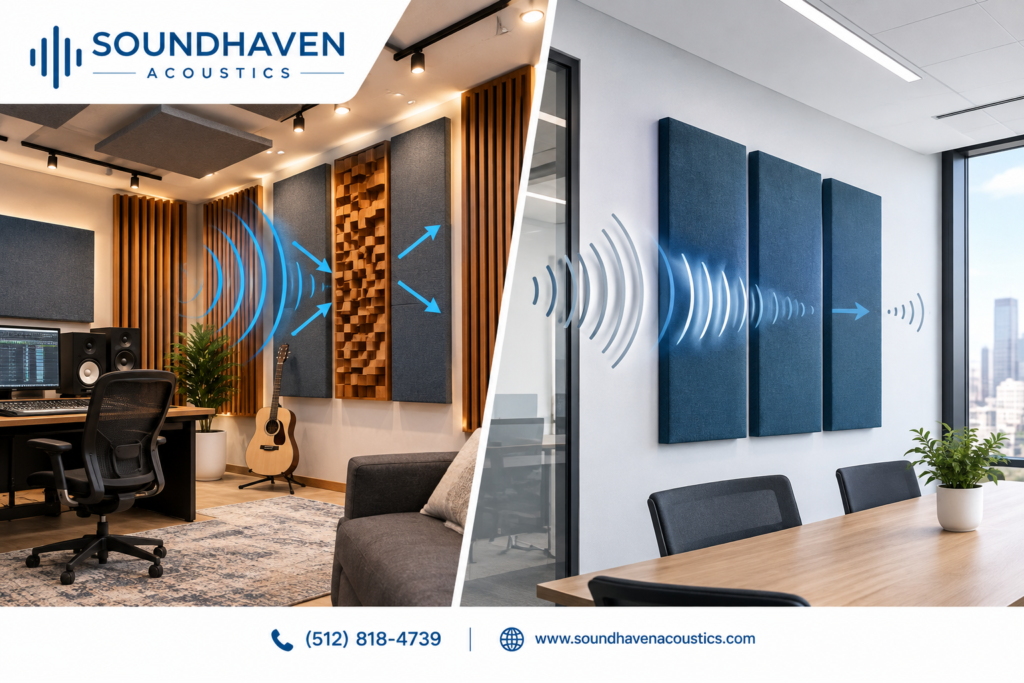
When improving the sound quality of a room, you may hear the terms acoustic treatment and sound absorption used together. Although they are closely related, they describe different things.
Sound absorption is one part of acoustic treatment. Sound absorption focuses on reducing sound reflections, while acoustic treatment is the broader process of improving how sound behaves throughout a room.
Understanding this difference can help you choose the right acoustic solution for a home studio, office, conference room, home theater, restaurant, gym, school, church, or other space.
What Is Sound Absorption?
Sound absorption is the process of reducing sound reflections inside a room. When sound waves hit hard surfaces such as drywall, glass, concrete, wood, or tile, they can reflect back into the space.
Too many reflections can create:
- Echo
- Excessive reverberation
- Poor speech clarity
- Unwanted sound reflections
- An uncontrolled listening environment
Sound-absorbing materials, such as acoustic panels, help absorb some of this sound energy and reduce the amount that reflects back into the room.
For example, installing an acoustic panel on a reflective wall to reduce echo is an example of sound absorption.
What Is Acoustic Treatment?
Acoustic treatment is the broader approach used to improve the acoustic performance of a room.
Rather than focusing on one material or one problem, acoustic treatment considers factors such as the room’s size, layout, surfaces, purpose, and specific sound issues.
An acoustic treatment plan may include:
- Acoustic wall panels
- Ceiling acoustic panels
- Corner bass traps
- Strategic panel placement
- Sound diffusion
- Different combinations of acoustic products
The goal is to create a more balanced, controlled, and comfortable acoustic environment.
For example, a recording studio may use acoustic panels to reduce reflections and bass traps to help manage low-frequency buildup. Together, these solutions form part of an overall acoustic treatment strategy.
Acoustic Treatment vs. Sound Absorption
The easiest way to understand the difference is:
Sound absorption is a specific acoustic method, while acoustic treatment is the overall strategy.
| Acoustic Treatment | Sound Absorption |
| Broad approach to improving room acoustics | Specific method of controlling reflected sound |
| Can include absorption, bass trapping, and diffusion | Primarily reduces sound reflections |
| Considers the room as a whole | Focuses on absorptive materials |
| Can use multiple acoustic solutions | Commonly uses acoustic panels and other absorptive materials |
| Aims for a balanced acoustic environment | Helps reduce echo and reverberation |
How Do Acoustic Panels Provide Sound Absorption?
Acoustic panels are designed to absorb sound energy when sound waves reach their surface.
Instead of allowing all of the sound to reflect from a hard wall, an absorptive panel captures a portion of that energy. This can reduce reflections and help control reverberation.
The effectiveness of an acoustic panel can depend on factors such as:
- Panel thickness
- Absorption material
- Panel size
- Room characteristics
- Panel placement
- Amount of acoustic treatment in the room
SoundHaven Acoustics offers acoustic panels in different sizes and thicknesses to provide options for different acoustic applications.
Is Sound Absorption Enough for Every Room?
Not necessarily.
Sound absorption can be highly effective for controlling echo and reverberation, but some rooms may have additional acoustic challenges.
For example, a recording studio may need to address low-frequency buildup as well as mid- and high-frequency reflections. A large restaurant may require a combination of wall and ceiling treatment to control reverberation throughout the space.
This is why acoustic treatment should be considered based on the specific characteristics and purpose of the room.
Acoustic Treatment for Different Spaces
Different rooms have different acoustic requirements.
Recording Studios
Recording studios require controlled acoustics to help produce clean recordings and accurate monitoring. Acoustic panels and bass traps can help manage reflections and low-frequency issues.
Offices and Conference Rooms
Excessive reverberation can make meetings and conversations difficult to follow. Sound-absorbing panels can help improve speech clarity and make conversations more comfortable.
Home Theaters
Acoustic treatment can help control unwanted reflections and improve the clarity of dialogue, music, and other audio.
Restaurants
Large dining spaces with hard floors, walls, ceilings, and other reflective surfaces can become noisy. Acoustic treatment can help reduce excessive reverberation and create a more comfortable environment.
Gyms
Large open spaces can produce significant echo and sound buildup. Acoustic panels can help absorb reflected sound and improve the overall acoustic environment.
Schools and Churches
Good speech intelligibility is important in classrooms, worship spaces, and other large rooms. Acoustic treatment can help reduce excessive reverberation and make spoken communication easier to understand.
Does Acoustic Treatment Include Soundproofing?
No. Acoustic treatment, sound absorption, and soundproofing address different acoustic problems.
Sound absorption helps reduce sound reflections inside a room.
Acoustic treatment is the broader process of improving the room’s acoustics.
Soundproofing focuses on reducing sound transmission between spaces.
For example, acoustic panels may help reduce echo in a room, but they are not designed to completely prevent sound from passing through walls.
Why Choose SoundHaven Acoustics for Acoustic Treatment?
SoundHaven Acoustics provides acoustic solutions designed to help control unwanted reflections and reverberation while improving sound clarity.
Acoustic panels can be used in a variety of residential and commercial environments, including studios, offices, home theaters, schools, restaurants, gyms, churches, and other spaces.
SoundHaven Acoustics offers different panel sizes, thicknesses, fabric options, and finishes, allowing acoustic treatment to be adapted to both the acoustic and design requirements of a space.
Whether you need to reduce echo in a conference room, improve sound quality in a studio, or create a more comfortable environment in a commercial space, choosing the right acoustic treatment starts with understanding the specific sound problem you want to solve.
Frequently Asked Questions
What is the main difference between acoustic treatment and sound absorption?
Sound absorption is a specific method used to reduce sound reflections, echo, and reverberation. Acoustic treatment is the broader process of improving a room’s overall acoustics and may include absorption, bass trapping, diffusion, and strategic placement of acoustic products.
Are acoustic panels sound absorbers?
Yes. Acoustic panels are generally designed to absorb sound energy and reduce reflections within a room. They can help control echo and reverberation and improve sound clarity.
Does acoustic treatment make a room soundproof?
No. Acoustic treatment is primarily intended to improve the sound inside a room. Soundproofing focuses on reducing sound transmission between spaces.
Is sound absorption the same as soundproofing?
No. Sound absorption reduces sound reflections within a room, while soundproofing aims to reduce the transfer of sound from one space to another.
Why is sound absorption important?
Sound absorption can help reduce excessive echo and reverberation, making speech, music, and other sounds clearer and more comfortable to hear.
How do I know if my room needs acoustic treatment?
If your room has noticeable echo, excessive reverberation, poor speech clarity, or an uncontrolled listening environment, it may benefit from acoustic treatment.
Can acoustic treatment include bass traps?
Yes. Bass traps can be included as part of an overall acoustic treatment strategy, particularly in spaces where low-frequency buildup is an issue.
Where should acoustic panels be placed?
Placement depends on the room and its acoustic challenges. Panels are commonly installed on reflective wall areas, while ceiling panels and bass traps may be used when additional treatment is needed.
Are acoustic panels suitable for commercial spaces?
Yes. Acoustic panels can be used in offices, conference rooms, restaurants, gyms, schools, churches, studios, and other commercial environments where controlling reverberation and improving sound clarity are important.
Can acoustic treatment improve speech clarity?
Yes. Reducing excessive reflections and reverberation can make speech easier to understand, particularly in conference rooms, classrooms, restaurants, churches, and other spaces where clear communication is important.
How does SoundHaven Acoustics help with acoustic treatment?
SoundHaven Acoustics provides acoustic panels and related solutions designed to help control reflections and reverberation in residential and commercial spaces. The available solutions can be selected based on the room’s acoustic requirements and design needs.
Improve Your Room Acoustics With SoundHaven Acoustics
Understanding the difference between acoustic treatment and sound absorption is the first step toward creating a better-sounding space.
Sound absorption is a method. Acoustic treatment is the overall strategy.
By selecting the appropriate acoustic products and placing them strategically, you can reduce unwanted reflections, control reverberation, and create a more comfortable acoustic environment.
Explore acoustic solutions from SoundHaven Acoustics to find the right approach for your space.