
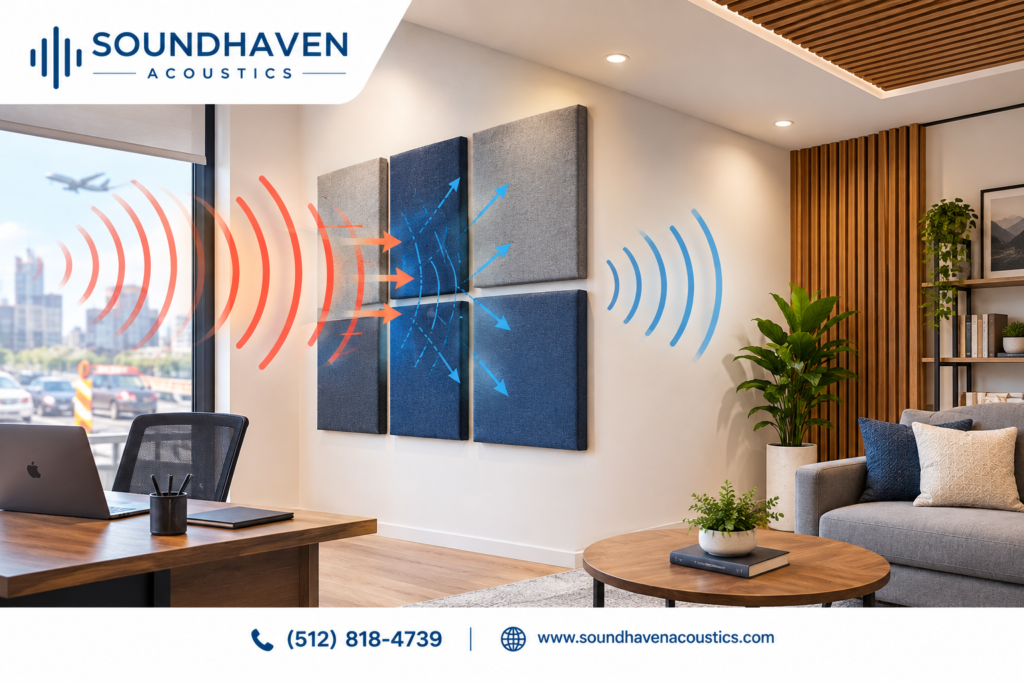
Unwanted noise can make a room uncomfortable and affect concentration, conversations, meetings, recording quality, and the overall listening experience. Whether you are dealing with echo in an office, excessive reverberation in a restaurant, or unwanted reflections in a home studio, the right acoustic solution can make a significant difference.
The best way to reduce noise inside a room depends on where the noise comes from and how it behaves. If sound is bouncing off hard surfaces, acoustic treatment can help absorb those reflections. If noise is entering from outside or traveling through walls, a soundproofing approach may be needed.
Here are some effective ways to reduce unwanted noise and improve room acoustics.
1. Install Acoustic Panels
One of the most effective ways to control unwanted sound reflections inside a room is by using acoustic panels.
Hard surfaces such as drywall, glass, concrete, wood, and tile can reflect sound waves. When multiple reflections occur, they can create echo and excessive reverberation.
Acoustic panels absorb a portion of this reflected sound energy, helping create a more controlled acoustic environment.
They can be used in:
- Home offices
- Conference rooms
- Recording studios
- Podcast rooms
- Home theaters
- Restaurants
- Gyms
- Schools
- Churches
- Commercial spaces
SoundHaven Acoustics offers acoustic panel solutions designed to help control unwanted reflections and improve sound clarity in residential and commercial environments.
2. Add Ceiling Acoustic Treatment
Noise and sound reflections do not only come from walls. Ceilings can also contribute to excessive reverberation, particularly in large rooms or spaces with high ceilings.
Ceiling acoustic panels or acoustic clouds can absorb reflected sound from above and provide additional acoustic control.
Ceiling treatment can be especially useful in:
- Open offices
- Classrooms
- Restaurants
- Gyms
- Large commercial spaces
- Conference rooms
Using wall and ceiling treatment together can help create a more balanced acoustic environment.
3. Use Corner Bass Traps
Low-frequency sound can be difficult to control because bass energy can accumulate in room corners.
If you notice excessive or uneven bass, corner bass traps may be useful as part of a broader acoustic treatment strategy.
Bass traps are commonly considered for:
- Recording studios
- Music rooms
- Home theaters
- Listening rooms
- Production spaces
SoundHaven Acoustics offers corner bass trap solutions for spaces that require additional low-frequency acoustic control.
4. Add Soft Furnishings
Furniture and soft materials can also help reduce sound reflections.
Depending on your room, consider adding:
- Area rugs
- Carpets
- Curtains
- Upholstered furniture
- Fabric furnishings
- Bookshelves
These materials can help reduce reflections from hard surfaces.
However, soft furnishings alone may not provide sufficient treatment for rooms with significant acoustic problems. Dedicated acoustic panels can provide more targeted sound absorption.
5. Reduce Hard, Reflective Surfaces
Large areas of glass, concrete, tile, bare drywall, and other hard materials can cause sound to reflect throughout a room.
Where possible, adding absorptive materials to reflective areas can help reduce excessive reverberation.
This is particularly important in large or open rooms where sound has more surfaces from which to reflect.
6. Place Acoustic Panels Strategically
Simply adding acoustic panels to a room does not guarantee the best results. Panel placement is important.
Acoustic panels should be positioned based on the room’s layout, listening areas, reflective surfaces, and specific acoustic problems.
In studios and home theaters, for example, first reflection points can be important areas for acoustic treatment.
For larger or more complex spaces, professional guidance can help determine where acoustic treatment is likely to be most effective.
7. Identify the Source of the Noise
Before choosing an acoustic solution, determine what type of noise you are trying to reduce.
Common problems include:
- Echo
- Reverberation
- Conversations
- Equipment noise
- HVAC noise
- Sound from neighboring rooms
- Traffic noise
- Outdoor noise
If the problem is sound reflecting inside the room, acoustic treatment may be the appropriate solution.
If the problem is sound entering or leaving the room, you may need soundproofing or sound-isolation measures.
Acoustic Treatment vs. Soundproofing
It is important to understand the difference between acoustic treatment and soundproofing.
Acoustic treatment is used to improve how sound behaves inside a room. Acoustic panels absorb reflections and help reduce echo and reverberation.
Soundproofing is designed to reduce the amount of sound traveling between spaces.
For example, acoustic panels can help make an echoing conference room sound clearer, but they will not completely block traffic noise coming through a window or prevent sound from passing through a shared wall.
How Can SoundHaven Acoustics Help?
SoundHaven Acoustics provides acoustic solutions designed to help control unwanted reflections, reverberation, and other room-acoustic challenges.
Acoustic treatment can be used in a variety of environments, including recording studios, offices, conference rooms, home theaters, restaurants, schools, gyms, churches, and other commercial spaces.
Depending on the room and its specific acoustic requirements, treatment may include acoustic wall panels, ceiling panels, corner bass traps, or a combination of solutions.
The right solution depends on factors such as room size, construction, surface materials, layout, and how the space is being used.
Frequently Asked Questions
What is the best way to reduce noise inside a room?
The best approach depends on the source of the noise. For echo and reverberation, sound-absorbing products such as acoustic panels can help reduce reflections. If noise is entering or leaving the room, soundproofing may be more appropriate.
Do acoustic panels reduce noise?
Yes. Acoustic panels absorb reflected sound and can help reduce echo and reverberation inside a room. They primarily improve room acoustics rather than completely blocking sound transmission.
How can I reduce echo in a room?
You can reduce echo by adding sound-absorbing materials such as acoustic wall panels, ceiling treatment, rugs, curtains, and upholstered furniture. Strategic placement of acoustic panels can provide more targeted acoustic control.
Do acoustic panels make a room quieter?
Acoustic panels can make a room sound quieter and more comfortable by reducing reflected sound and reverberation. However, they do not completely soundproof a room.
Can acoustic panels block outside noise?
Acoustic panels are primarily designed to absorb sound reflections inside a room. They are not intended to completely block outside noise entering through walls, windows, doors, or other openings.
What is the difference between noise reduction and soundproofing?
Noise reduction inside a room can involve controlling reflections, echo, and reverberation through acoustic treatment. Soundproofing focuses on reducing sound transmission between different spaces.
Do rugs help reduce noise?
Yes. Rugs and carpets can help absorb some sound reflections and reduce reflections from hard flooring. They can be useful as part of a broader acoustic treatment approach.
Do curtains help with room acoustics?
Curtains can help reduce some sound reflections, particularly from windows and other hard surfaces. However, dedicated acoustic panels generally provide more targeted sound absorption.
How many acoustic panels do I need?
The number of panels required depends on the room’s size, surfaces, purpose, existing furnishings, and acoustic requirements. There is no single number that works for every room.
Where should acoustic panels be placed?
Panel placement depends on the room and its specific acoustic challenges. Walls with significant sound reflections and first reflection points can be important areas to consider. Ceiling panels and corner treatments may also be appropriate depending on the space.
Are acoustic panels good for home theaters?
Yes. Acoustic panels can help reduce unwanted reflections and reverberation, which can improve dialogue clarity and the overall listening experience in a home theater.
Can acoustic panels help in an office?
Yes. Acoustic panels can help reduce excessive reverberation and improve speech clarity in offices, conference rooms, meeting spaces, and open-plan work areas.
Can acoustic panels reduce noise in restaurants?
Acoustic panels can help control reflected sound and excessive reverberation in restaurants. This can create a more comfortable environment where customers can communicate more easily.
Do I need acoustic panels or soundproofing?
If your primary issue is echo, reverberation, or poor sound clarity, acoustic treatment may be appropriate. If noise is traveling through walls, ceilings, floors, windows, or doors, you may need a soundproofing strategy.
Can SoundHaven Acoustics help with acoustic treatment?
Yes. SoundHaven Acoustics offers acoustic solutions for residential and commercial environments, including acoustic panels and other treatment options for different room types and acoustic requirements.
Create a Better-Sounding Room With SoundHaven Acoustics
Reducing unwanted noise inside a room starts with identifying the type of sound problem you are experiencing.
If echo and reverberation are the main concerns, acoustic panels, ceiling treatment, bass traps, and strategic placement can help create a more controlled acoustic environment.
If the problem involves sound traveling between spaces, a dedicated soundproofing approach may be necessary.
SoundHaven Acoustics can help you explore acoustic treatment options designed around the needs of your space, whether you are improving a home studio, office, home theater, restaurant, gym, school, church, or commercial environment.