
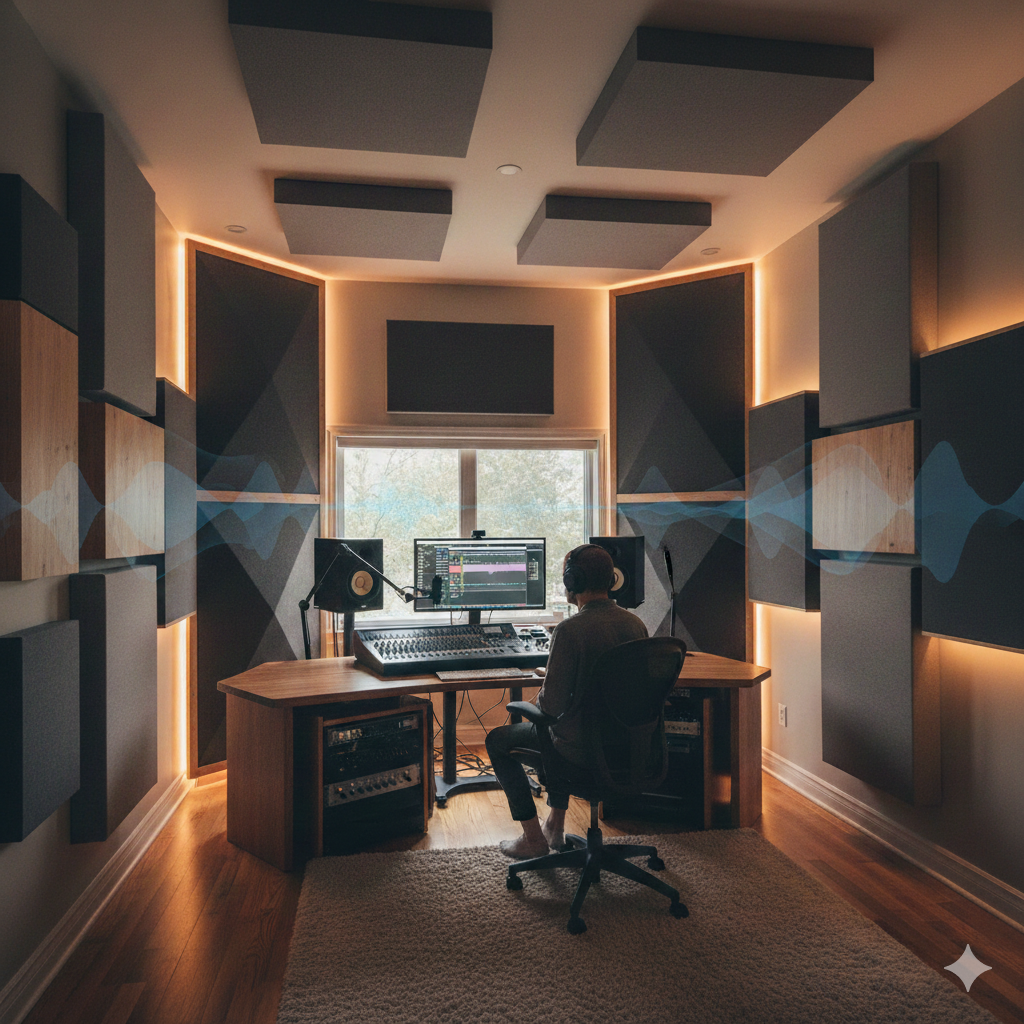
Bass Traps Explained: What Is a Bass Trap and How Does It Improve Sound?
When it comes to achieving clean, balanced sound in any space, few acoustic treatments are as important as bass traps. Whether you’re designing a home studio, home theater, podcast room, or professional listening environment, understanding what a bass trap is and what a bass trap does can completely change how your room sounds—and feels. Low frequencies are powerful, but they’re also the hardest to control. That’s where bass traps for corners and other strategic placements come into play. In this guide, we’ll break down: What Is a Bass Trap? A bass trap is a type of acoustic panel specifically designed to absorb low-frequency sound waves (bass). These frequencies tend to build up in rooms, causing problems like booming, muddiness, uneven bass response, and long decay times. While standard acoustic panels handle mid and high frequencies, bass waves are longer and more powerful—meaning they need thicker, denser treatments to control them effectively. In short: bass traps absorb excess bass energy and help your room sound tighter, clearer, and more accurate. You may also see the term base trap used online—this is simply a common misspelling of bass trap, but it refers to the same acoustic treatment. What Does a Bass Trap Do? So, what does a bass trap do exactly? Bass traps work by: Without bass traps, low frequencies bounce between walls, floors, and ceilings, creating peaks and nulls—some bass notes sound overpowering, while others disappear completely. With proper bass trapping, the room becomes predictable and trustworthy, allowing you to hear sound as it was intended. Why Bass Frequencies Are So Hard to Control Bass waves are much longer than high-frequency sound waves. Because of this, they: This buildup creates room modes, which are resonances caused by the room’s dimensions. These modes are the main reason untreated rooms sound boomy or muddy. That’s why the bass trap is considered a foundation of any serious acoustic treatment plan. How Do Bass Traps Work? Bass traps absorb sound energy and convert it into a tiny amount of heat through friction inside the panel’s material. The thicker the trap, the more effective it is at absorbing lower frequencies. Most bass traps are made using: These porous materials allow sound waves to enter the trap, where their energy is gradually reduced instead of reflecting back into the room. Bass Traps for Corners: Why Placement Matters If you’re only installing bass traps in one location, corners should always come first. Why corners? Low-frequency sound energy naturally collects where surfaces meet—especially where: This makes corners the most effective place for bass absorption. Bass Traps for Corners Deliver: What Is a Tri Trap (Corner Bass Trap)? A tri trap (also known as a corner bass trap) is specifically shaped to fit snugly into room corners. These traps take advantage of the highest pressure zones in a space, making them extremely efficient. Benefits of Tri Traps Tri traps are especially effective in home studios, control rooms, and home theaters where low-frequency accuracy is critical. Where Else Should Bass Traps Be Placed? While corners are the priority, a complete bass trapping strategy may also include: Back Wall The longest room dimension often causes strong bass reflections. Thick bass traps on the back wall help control these reflections and reduce low-end ringing. Behind Speakers Placing bass traps behind speakers helps control early bass reflections and improves low-frequency definition. Ceiling Corners Ceiling-to-wall corners are often overlooked but can significantly improve bass response when treated. Do Bass Traps Help With Soundproofing? This is a common question—and an important distinction. Bass traps do not soundproof a room. They are designed to improve sound inside a space, not stop sound from leaving it. Soundproofing requires: Bass traps are part of acoustic treatment, not sound isolation—but they are essential for achieving high-quality sound. How Many Bass Traps Do You Need? There’s no one-size-fits-all answer, but a good starting point is: The more bass traps you add, the smoother and more controlled your low-frequency response will be. Coverage area matters—especially in smaller rooms. Are Bass Traps Only for Studios? Not at all. Bass traps are perfect for: Any room where sound quality matters will benefit from proper bass trapping. The Key to Better Sound If your room sounds muddy, boomy, or uneven, the issue isn’t your speakers—it’s your space. Understanding what a bass trap is, what a bass trap does, and how to place bass traps for corners is the fastest way to transform your listening experience. At SoundHaven Acoustics, we design professional-grade acoustic panels and bass traps that blend performance with style—helping you hear the difference in any environment. Ready to Improve Your Room Acoustics? Explore our bass traps and corner solutions or contact our team for expert guidance tailored to your space.
Bass Traps Explained: What Is a Bass Trap and How Does It Improve Sound? Read More »