
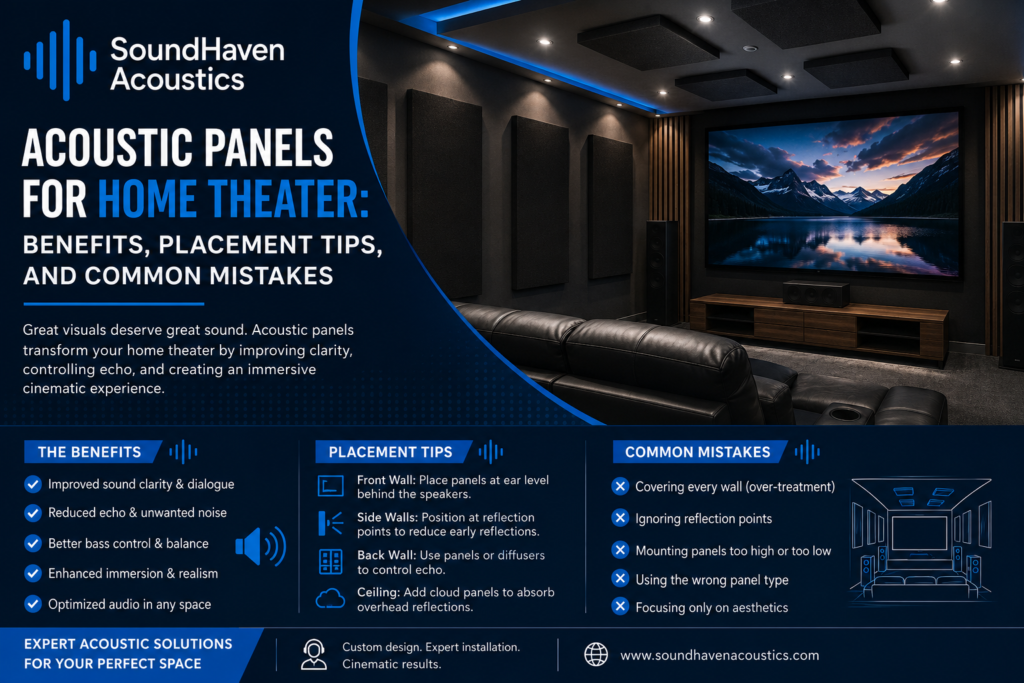
A high-quality home theater is not defined only by expensive speakers, projectors, or seating—it is defined by how the room sounds. Even premium audio systems can feel unclear or flat when installed in an untreated room. That’s why acoustic panels for home theater setups are one of the most important upgrades for achieving a true cinematic experience.
At SoundHaven Acoustics, the focus is on transforming everyday rooms into professionally tuned listening environments using properly designed acoustic treatment. Understanding the benefits, correct placement, and common mistakes can help you get the most out of your home theater system.
Why Acoustic Panels for Home Theater Matter
Most home theaters are built in standard residential rooms with hard surfaces like drywall, glass, tile, or wood flooring. These surfaces reflect sound waves, which causes:
- Echo and reverberation
- Poor dialogue clarity
- Harsh or muddy sound
- Weak surround sound imaging
Acoustic panels for home theater solve these problems by absorbing and controlling reflected sound energy, allowing your speakers to perform as intended.
Without acoustic treatment, even high-end systems cannot deliver their full potential.
Key Benefits of Acoustic Panels for Home Theater
1. Improved Dialogue Clarity
One of the biggest improvements you’ll notice is clearer speech. Acoustic panels reduce sound reflections that interfere with dialogue, making conversations in movies easier to understand—even at lower volumes.
2. Enhanced Surround Sound Imaging
Proper acoustic treatment allows sound to move more accurately around the room. This improves the sense of direction and immersion, making movie scenes feel more realistic and engaging.
3. Reduced Echo and Reverberation
Hard surfaces in a room cause sound to bounce repeatedly. Acoustic panels absorb these reflections, reducing echo and creating a cleaner listening environment.
4. Better Bass Control
When paired with bass traps or thicker panels, acoustic treatment helps manage low-frequency buildup in corners, resulting in tighter and more balanced bass response.
5. More Balanced Listening Experience
Without acoustic treatment, some seats in the room may sound better than others. Acoustic panels help distribute sound more evenly, improving consistency across all seating positions.
Best Placement Tips for Acoustic Panels for Home Theater
Placement is more important than quantity. Strategic positioning delivers the best results.
1. First Reflection Points (Most Important)
These are the spots where sound first bounces before reaching your ears. Treating them provides the most noticeable improvement.
Common locations include:
- Side walls near seating area
- Ceiling above the listening position
- Front wall near speakers
2. Rear Wall Treatment
The back wall often causes sound reflections that lead to echo or “slap delay.” Installing acoustic panels here helps:
- Improve surround sound accuracy
- Reduce sound bounce-back
- Enhance overall clarity
3. Corner Bass Control
Low-frequency sound naturally builds up in corners. Adding bass traps or thick acoustic panels helps:
- Reduce booming bass
- Improve low-end accuracy
- Balance overall sound performance
4. Behind Speakers
Placing panels behind front speakers helps control early reflections and improves sound directionality.
5. Avoid Over-Treatment
One important rule: don’t over-cover the room. Too many panels can make the space sound overly “dead” and unnatural.
Common Mistakes When Using Acoustic Panels for Home Theater
Even with good equipment, improper acoustic treatment can reduce performance. Here are the most common mistakes:
1. Covering Too Many Walls
Many people assume more panels mean better sound. Over-treatment can remove natural acoustics and make audio feel flat.
2. Ignoring First Reflection Points
Installing panels randomly without addressing reflection points reduces effectiveness significantly.
3. Using Low-Quality Foam Panels
Cheap foam panels may reduce some echo but often fail to control mid and low frequencies effectively.
4. Forgetting Bass Management
Many setups focus only on walls and ignore corners, where bass buildup causes major sound imbalance.
5. Poor Symmetry in Placement
Uneven panel placement can lead to unbalanced sound imaging, where audio feels stronger on one side.
Choosing the Right Acoustic Panels
Not all acoustic panels perform the same. Key factors include:
Thickness
- 1-inch panels: light echo control
- 2-inch panels: standard home theater use
- 4-inch panels: better full-range absorption
Material Quality
High-performance panels typically use:
- Mineral wool or fiberglass core
- Fabric-wrapped breathable surface
- Fire-rated, durable materials
These materials provide more effective and consistent sound control compared to basic foam alternatives.
Acoustic Panels vs. Soundproofing
A common misconception is that acoustic panels block sound from leaving the room.
In reality:
- Acoustic panels improve sound inside the room
- Soundproofing prevents sound from entering or exiting
Both serve different purposes and are often used together in premium home theater designs.
Why Professional Acoustic Planning Matters
A properly designed home theater is not about adding panels randomly—it’s about understanding sound behavior in the room.
Professional acoustic planning ensures:
- Correct panel placement
- Balanced absorption and reflection
- Optimized speaker performance
- A natural cinematic sound experience
This is where expert acoustic design makes a major difference.
Additional Acoustic Solutions from SoundHaven Acoustics
Along with acoustic panels for home theater, SoundHaven Acoustics offers:
- Custom acoustic panel design
- Bass trap solutions
- Ceiling cloud panels
- Decorative acoustic art panels
- Full-room acoustic treatment planning
- Consultation and layout optimization
These solutions help create fully immersive entertainment spaces.
Final Thoughts
Using SoundHaven Acoustics acoustic panels for home theater is one of the most effective ways to improve sound quality without upgrading expensive equipment. By reducing echo, enhancing clarity, and improving bass response, acoustic treatment transforms an ordinary room into a true cinematic environment.
However, success depends on proper placement, balanced design, and avoiding common mistakes like over-treatment or random installation. When done correctly, acoustic panels deliver a dramatic improvement in both sound accuracy and overall viewing experience.
A well-treated home theater doesn’t just sound better—it feels more immersive, natural, and professionally engineered.
Frequently Asked Questions (FAQs)
Acoustic panels control sound reflections inside the room. They reduce echo, improve clarity, and help your speakers deliver cleaner and more accurate audio.
Yes, acoustic panels for home theater significantly improve dialogue clarity, surround sound precision, and overall listening comfort by reducing unwanted reflections.
The most effective locations are first reflection points (side walls and ceiling), the rear wall behind seating, and corners for bass control.
It depends on room size and layout. Most rooms need treatment of key reflection points rather than full wall coverage for balanced sound.
Acoustic panels improve sound quality inside the room, while soundproofing prevents sound from entering or leaving the room. They serve different purposes.
Yes. Thicker panels (2–4 inches) provide better absorption, especially for lower frequencies, making them ideal for home theater setups.
Yes, many acoustic panels are designed for DIY installation, but professional placement ensures more accurate sound optimization and better overall results.