
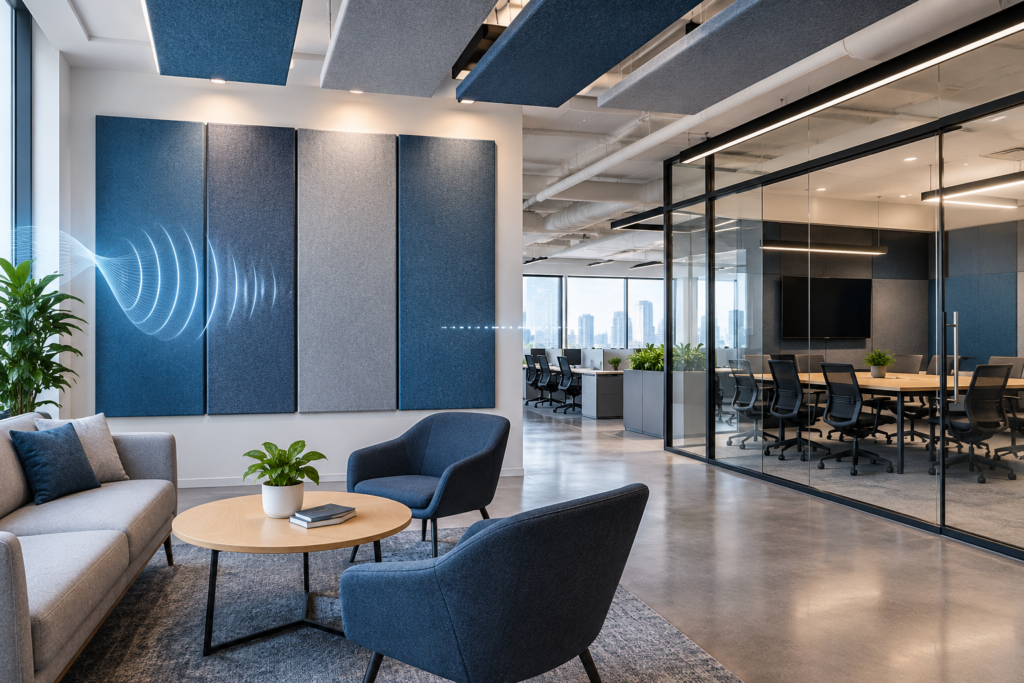
Commercial spaces are designed to support productivity, communication, and customer experiences. However, excessive background noise, echo, and sound reflections can make these environments uncomfortable and less functional. From busy offices and conference rooms to restaurants, educational facilities, and recording studios, managing indoor acoustics is essential for creating a better environment.
Noise reduction acoustic panels offer an effective solution for controlling unwanted sound reflections and improving overall sound quality. By absorbing sound energy, these panels help reduce echo and reverberation, making conversations clearer and indoor spaces more comfortable.
At SoundHaven Acoustics, acoustic solutions are designed to help businesses create balanced, functional, and acoustically comfortable environments. Understanding how acoustic panels work and where to install them can help commercial property owners make informed decisions about sound management.
What Are Noise Reduction Acoustic Panels?
Noise reduction acoustic panels are specially designed materials installed on walls or ceilings to absorb sound waves and minimize sound reflections within a room. Unlike ordinary decorative wall coverings, acoustic panels are engineered to improve the acoustic performance of an indoor environment.
When sound travels through a room, it can bounce off hard surfaces such as concrete walls, glass windows, tile floors, and ceilings. These reflections create echoes and reverberation, making it difficult to understand speech and communicate effectively.
Acoustic panels absorb a portion of this reflected sound energy, helping create a quieter and more balanced listening environment.
Common applications include:
- Corporate offices and open-plan workspaces
- Conference rooms and meeting spaces
- Restaurants, cafes, and hospitality venues
- Schools, universities, and educational facilities
- Recording studios and production rooms
- Healthcare facilities and waiting areas
- Commercial buildings and shared workspaces
Why Are Acoustic Panels Important for Commercial Spaces?
Commercial environments often experience continuous activity, conversations, equipment noise, and movement. Without proper acoustic treatment, these sounds can overlap and create uncomfortable noise levels.
Installing acoustic panels for commercial spaces helps businesses address common acoustic challenges while improving the functionality of their interiors.
1. Reduce Echo and Reverberation
Large commercial rooms with hard surfaces often produce excessive sound reflections. Acoustic panels absorb reflected sound, reducing reverberation and helping create a more controlled acoustic environment.
This is particularly beneficial in conference rooms, auditoriums, restaurants, and large office spaces.
2. Improve Speech Clarity
Clear communication is essential in professional environments. Excessive reverberation can make conversations difficult to understand, especially during meetings and presentations.
Acoustic treatment helps minimize distracting reflections, allowing employees, customers, and visitors to communicate more comfortably.
3. Create More Comfortable Work Environments
Continuous background noise can become distracting in busy workplaces. Proper acoustic treatment helps control sound reflections and contributes to a more comfortable indoor environment.
This can be particularly useful in open offices, collaborative workspaces, and shared meeting areas.
4. Enhance Customer and Visitor Experiences
Restaurants, hotels, retail environments, and hospitality businesses need comfortable spaces where customers can communicate without struggling against excessive background noise.
Strategically placed acoustic panels help improve the overall sound environment while complementing the interior design.
5. Combine Acoustic Performance with Interior Design
Modern acoustic panels are available in different materials, colors, finishes, and designs. Businesses can select solutions that complement their existing interiors while addressing specific acoustic requirements.
This allows commercial properties to improve sound quality without compromising their visual appearance.
Types of Acoustic Panels for Commercial Applications
Choosing the right acoustic treatment depends on room dimensions, surface materials, intended use, and the type of sound-related problem.
Some commonly used acoustic solutions include:
Fabric-Wrapped Acoustic Panels
Fabric-wrapped panels are widely used in offices, conference rooms, and educational environments. Their sound-absorbing construction helps control reflections while offering a variety of fabric colors and finishes.
Acoustic Ceiling Panels
Ceiling panels help manage sound reflections in commercial spaces with high ceilings or large open areas. They can be particularly useful in offices, classrooms, and multipurpose facilities.
Acoustic Wood Panels
Acoustic wood panels combine a natural appearance with acoustic functionality. They are suitable for commercial interiors where businesses want to maintain a warm, architectural, and professional design.
Acoustic Wall Panels
Wall-mounted acoustic panels help reduce sound reflections from large, exposed wall surfaces. They are commonly installed in meeting rooms, offices, restaurants, and other commercial environments.
Ceiling Baffles and Suspended Acoustic Panels
Suspended acoustic treatments can be useful in spaces where wall installations alone may not provide sufficient sound absorption. They are often considered for large commercial interiors and open-ceiling environments.
How to Choose the Right Acoustic Panels for Commercial Spaces
Selecting appropriate acoustic treatment requires understanding how a space is used and identifying its main sound-related challenges.
Consider these important factors before choosing acoustic panels:
Room Size and Layout: Larger spaces may require more extensive acoustic treatment. Room dimensions, ceiling height, and furniture placement can influence panel selection and positioning.
Existing Surface Materials: Glass, concrete, metal, and other reflective surfaces can contribute to excessive reverberation. Identifying these surfaces helps determine where acoustic treatment may be most beneficial.
Primary Purpose of the Space: A conference room requires clear speech, while a recording studio may require more precise acoustic control. Treatment should match the intended function of the environment.
Panel Material and Design: Select materials and finishes that meet the acoustic requirements while complementing the commercial interior.
Installation Location: Wall panels, ceiling panels, and suspended solutions serve different purposes. A professional acoustic assessment can help determine the appropriate combination.
Where Should Businesses Install Noise Reduction Acoustic Panels?
The placement of acoustic panels is just as important as selecting the right products. Strategic installation can help improve acoustic performance throughout a commercial property.
- Conference Rooms: Install wall or ceiling panels to reduce reflections and support clearer discussions.
- Open-Plan Offices: Use acoustic wall treatments and ceiling solutions to help control reflected sound in shared work areas.
- Restaurants: Consider wall and ceiling treatments to improve the dining environment and reduce excessive reverberation.
- Educational Facilities: Install acoustic panels in classrooms and lecture rooms to support speech intelligibility.
- Recording Studios: Use appropriate wall and ceiling treatments to manage reflections and support controlled recording environments.
- Reception Areas: Consider decorative acoustic solutions to create a more comfortable first impression for visitors.
Why Choose SoundHaven Acoustics for Commercial Acoustic Solutions?
Creating an effective acoustic environment requires more than simply adding sound-absorbing materials to walls. Businesses need solutions that address their room conditions, functional requirements, and interior design goals.
SoundHaven Acoustics focuses on acoustic products and solutions that help improve sound quality across different types of environments. Whether you are planning an office renovation, designing a conference room, or improving the acoustics of a commercial facility, selecting suitable acoustic treatments is an important step.
Explore the acoustic solutions available at SoundHaven Acoustics to find options for your commercial sound management requirements.
Frequently Asked Questions (FAQs)
1. How do noise reduction acoustic panels work?
Noise reduction acoustic panels work by absorbing sound waves that would otherwise reflect off hard surfaces such as walls and ceilings. This helps reduce echo and reverberation, improving sound clarity and the overall acoustic environment.
2. Are acoustic panels for commercial spaces effective in reducing office noise?
Yes. Acoustic panels for commercial spaces help absorb reflected sound and reduce reverberation in offices. They can make conversations clearer and help create a more comfortable working environment, particularly in open-plan offices and meeting rooms. However, they do not completely block noise traveling between rooms.
3. Where should acoustic panels be installed in a commercial building?
Acoustic panels can be installed on walls, ceilings, or suspended from ceilings depending on the room layout and acoustic requirements. Common installation areas include conference rooms, offices, restaurants, classrooms, reception areas, and recording studios.
4. Do acoustic panels completely soundproof a commercial space?
No. Acoustic panels primarily absorb sound reflections within a room rather than completely blocking sound from entering or leaving it. Soundproofing requires additional construction solutions, such as insulated walls, sealed openings, and appropriate sound-isolation systems.
5. What types of acoustic panels are best for commercial spaces?
The best option depends on the intended application. Fabric-wrapped panels are commonly used in offices and conference rooms, acoustic ceiling panels work well in larger interiors, and acoustic wood panels can provide both sound absorption and an architectural appearance.
6. Can acoustic panels improve speech clarity in conference rooms?
Yes. Acoustic panels help control sound reflections and reverberation, making spoken words easier to understand. This can improve communication during meetings, presentations, and video conferences.
7. Are decorative acoustic panels suitable for commercial interiors?
Yes. Decorative acoustic panels combine sound absorption with visual appeal. Businesses can select different finishes, colors, and materials to complement their interior design while addressing acoustic challenges.
8. How many acoustic panels does a commercial space need?
The required number depends on room dimensions, ceiling height, existing surface materials, occupancy, and the desired acoustic performance. A professional acoustic assessment can help determine the appropriate coverage and panel placement.
Final Thoughts
Managing sound effectively is an important part of designing comfortable and functional commercial interiors. Noise reduction acoustic panels help control echo, minimize reverberation, and improve speech clarity across different business environments.
By selecting suitable acoustic panels for commercial spaces, businesses can create more comfortable offices, clearer meeting rooms, better dining environments, and improved acoustic conditions for employees and visitors.