
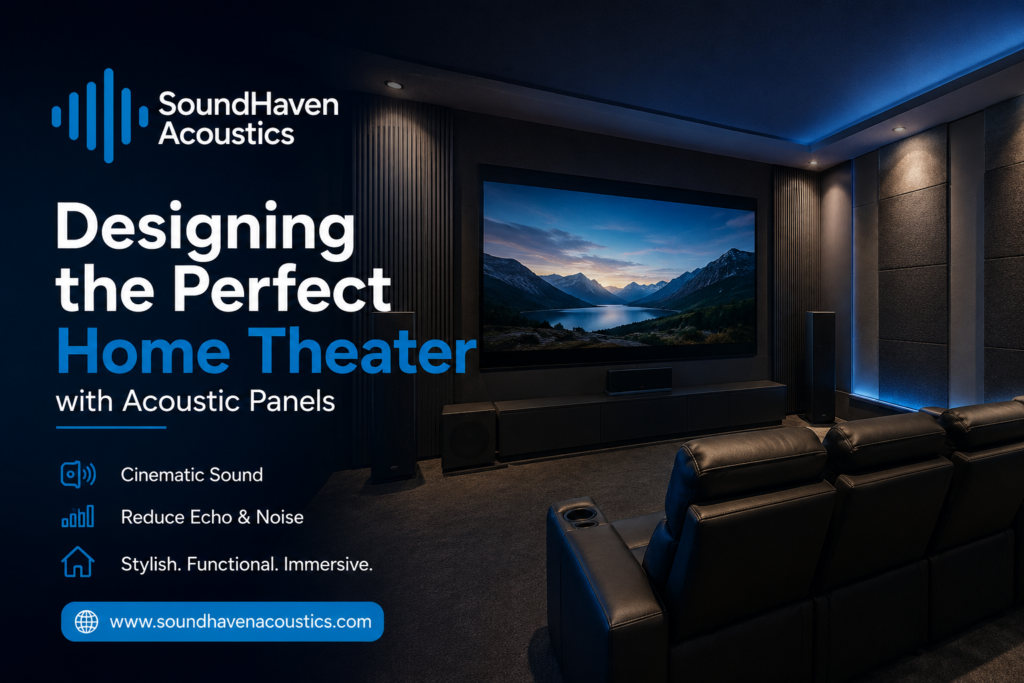
A great home theater is not just about a high-end projector, powerful speakers, or luxury seating—it’s about how the room sounds. Even the best audio system can feel weak, unclear, or “echo-heavy” if the room is not acoustically treated. This is where acoustic panels for home theaters become essential.
At SoundHaven Acoustics, the focus is on helping homeowners transform ordinary rooms into true cinematic environments using professionally designed acoustic solutions. A properly planned setup of acoustic panels can completely change how dialogue, music, and surround sound are experienced in a home theater.
Why Acoustic Panels Matter in Home Theater Design
Most home theaters start as regular rooms with hard surfaces—painted walls, glass, tile, or wood floors. These surfaces reflect sound waves, creating:
- Echo and reverberation
- Muffled dialogue
- Boomy or uneven bass
- Poor surround sound clarity
Acoustic panels for home theaters solve these problems by absorbing unwanted reflections and controlling how sound behaves in the room.
As research and industry experts consistently highlight, room acoustics often have a greater impact on sound quality than the audio equipment itself .
What Acoustic Panels Actually Do
Acoustic panels are designed to control sound reflections inside a room. Instead of letting sound bounce around uncontrollably, they:
- Absorb mid and high-frequency reflections
- Reduce echo and flutter
- Improve speech clarity
- Enhance surround sound imaging
- Create a balanced listening environment
When installed correctly, acoustic panels allow your speakers to perform as intended—delivering crisp dialogue and immersive cinematic sound.
Key Elements of a Perfect Home Theater Acoustic Setup
Designing the perfect home theater is not about covering every wall—it’s about strategic placement.
1. First Reflection Points (Most Important)
The first reflection points are where sound from your speakers hits the walls before reaching your ears. Treating these areas delivers the biggest improvement in clarity.
Typical locations include:
- Side walls near the main seating position
- Ceiling above the listening area
- Front wall near speakers
These early reflections are the main cause of audio blur if left untreated .
2. Rear Wall Treatment
The back wall in a home theater can create strong echo buildup. Installing acoustic panels here helps:
- Reduce sound bounce-back
- Improve surround sound accuracy
- Prevent “slap echo”
Covering a portion (not all) of the rear wall usually gives the best balance between absorption and natural sound.
3. Corner Bass Control
Low-frequency sound (bass) builds up in corners of the room. Without treatment, this leads to:
- Boomy bass
- Uneven sound distribution
- Loss of audio detail
Bass traps or thicker acoustic panels in corners help control these low-frequency issues and tighten overall sound performance.
Choosing the Right Acoustic Panels
Not all panels are equal. The performance of a home theater depends heavily on the quality and design of the panels used.
Thickness Matters
- 1-inch panels: basic echo control (limited bass impact)
- 2-inch panels: standard home theater absorption
- 4-inch panels: best for full-range performance, including lower frequencies
Material Quality
High-quality acoustic panels typically use:
- Dense mineral wool or fiberglass cores
- Fabric-wrapped breathable surfaces
- Fire-rated materials for safety
These materials provide more consistent and effective sound absorption compared to low-density foam alternatives.
Acoustic Panels vs. Room Over-Treatment
One of the most common mistakes in home theater design is using too many acoustic panels.
Over-treating a room can make it feel:
- Too “dead” or unnatural
- Flat and lifeless for music
- Uncomfortable for long viewing sessions
The goal is controlled acoustics, not complete sound elimination. A mix of absorption and some reflective surfaces helps maintain a natural cinematic feel.
How Acoustic Panels Improve Your Viewing Experience
A properly designed acoustic setup creates noticeable improvements:
Clearer Dialogue
You no longer have to raise the volume just to understand conversations.
Immersive Surround Sound
Effects move smoothly around the room instead of blending together.
Better Bass Response
Tighter, more controlled low-end without distortion.
Balanced Listening Across Seats
Every seat in the room experiences consistent sound quality.
Placement Strategy for Best Results
For a well-balanced home theater:
- Treat first reflection points first
- Add bass traps in corners
- Add rear wall absorption if needed
- Fine-tune with additional panels after testing sound
This step-by-step approach ensures performance improvements without overloading the space.
Why Professional Acoustic Design Matters
Even with high-quality equipment, poor room design can ruin sound performance. That’s why modern home theater designers emphasize room acoustics as a foundation for good audio systems.
Proper acoustic treatment ensures:
- Accurate sound reproduction
- Reduced distortion
- Better speaker performance
- A true cinematic experience at home
In many cases, acoustic treatment provides a bigger improvement than upgrading speakers or amplifiers.
Additional Acoustic Solutions from SoundHaven Acoustics
To complement home theater acoustic panels, SoundHaven Acoustics also offers:
- Custom acoustic panel design
- Wall-mounted and ceiling panels
- Bass trap solutions
- Decorative acoustic art panels
- Full-room acoustic treatment planning
- Soundproofing consultation
These solutions help homeowners build fully optimized entertainment spaces.
Final Thoughts
Soundhaven acoustics Designing the perfect home theater is about more than just technology—it’s about controlling how sound behaves in your space. With properly placed acoustic panels for home theaters, you can dramatically improve clarity, balance, and immersion.
By focusing on reflection points, bass control, and balanced treatment rather than overloading the room, you can achieve a professional cinema-like experience right at home.
A well-designed acoustic environment doesn’t just improve sound—it transforms the entire way you experience movies, music, and entertainment.
Frequently Asked Questions (FAQs)
Acoustic panels are used to absorb unwanted sound reflections inside a home theater. They reduce echo, improve dialogue clarity, and enhance overall sound quality for a more cinematic experience.
Yes. Properly placed acoustic panels for home theaters significantly improve sound clarity, reduce distortion, and create a more balanced and immersive audio experience.
The most important areas include first reflection points on side walls, the rear wall behind seating, and corners for bass control using thicker panels or bass traps.
It depends on room size and layout. Most home theaters require treatment of key reflection points rather than covering every surface to maintain natural sound balance.
No, they serve different purposes. Acoustic panels improve sound quality inside the room, while soundproofing prevents sound from entering or leaving the room.
For most home theaters, 2-inch panels are standard, while 4-inch panels are better for improved bass control and full-range sound absorption.
Yes, many panels are designed for DIY installation. However, professional placement can provide better acoustic performance and more precise sound optimization.